The Symphony of Learning
The Benefits of Music in Education

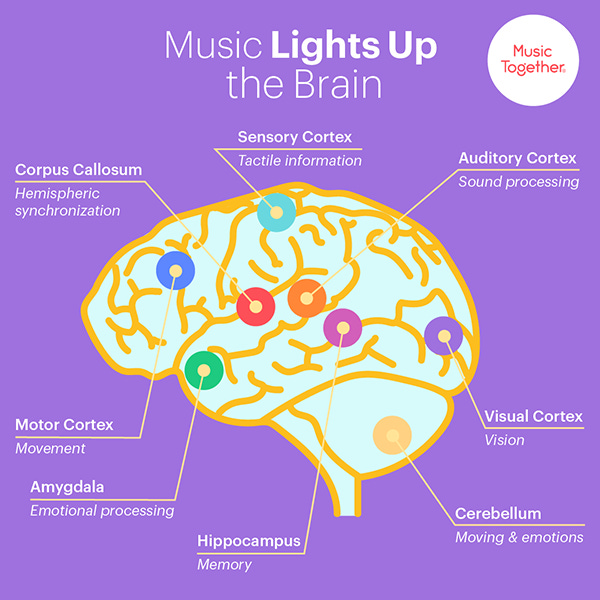
Music benefits cognitive development and academic performance and can profoundly transform the educational landscape. Music's benefits for learning are multifaceted, touching on human development's cognitive, emotional, and social aspects. Incorporating music as an art and a fundamental learning tool could revolutionize education, enriching learning deeply.
Music education, particularly learning to play an instrument, has been shown to enhance various cognitive functions. Studies suggest that music students tend to score higher in subjects like math and science. This correlation isn't coincidental; music education requires understanding patterns, rhythm, and structure, which are fundamental in mathematics and logical reasoning.
https://www.tandfonline.com/doi/full/10.1080/03055698.2023.2216826
Learning music and listening to music significantly boosts memory capacity. The brain's response to music involves multiple areas, leading to improved neural connections that are beneficial for memory retention. Music can also help maintain concentration, as it often requires spending hours learning and repeating phrases and long pieces of melody.
https://magazine.hms.harvard.edu/articles/how-music-resonates-brain
Music education fosters emotional intelligence by teaching students to express and interpret emotions through sound. This emotional literacy can improve student interpersonal skills, empathy, and social cohesion. Group music activities, like band or choir, promote teamwork and discipline, which are essential for social development.
https://heartmindonline.org/resources/research-links-music-and-emotional-awareness
Research also indicates that students involved in music programs often exhibit higher academic performance across various subjects through the discipline required in music practice. This translates into better study habits and increased motivation. Music can also be used as a mnemonic device, which I have personally done many times in medical school.
https://www.apa.org/news/press/releases/2019/06/music-students-score-better
Music and language processing share neural pathways. "An increasing number of neuroimaging studies point to a large and significant neural overlap in the responses to vocal and musical stimuli, taken as evidence of neural sharing between music and speech processing." Music can enhance phonological awareness, which is crucial for reading and language development, and it benefits literacy skills by helping students decode and comprehend text more effectively.
https://www.ncbi.nlm.nih.gov/pmc/articles/PMC4321131/
Music also has enormous therapeutic qualities, reducing stress and anxiety, which are significant barriers to learning. By integrating music into the curriculum, schools can provide a natural stress relief mechanism, improving mental health outcomes among students.
https://www.ncbi.nlm.nih.gov/pmc/articles/PMC5626863/
There is much to say about music, learning, and children. Fostering their love for music can open a new world of knowledge and adventure. I have been blessed to have been exposed to music at an early age, and watching my kids, some more than others, follow that path feels poignant. Music is not just a sound. It is a source of wisdom, strength, and knowledge.
"Music is the universal language of mankind." Henry Wadsworth Longfellow

"When I open my eyes, I must sigh, for what I see is contrary to my religion. And I cannot help but despise a world that does not understand that music is a higher revelation than all wisdom and philosophy." -- Beethoven
Thanks Kat. Agreed. For some years I played acoustic guitar daily, and I think the vibrations from it transferred directly to my body, as the guitar sits on the body. It became a bit addictive in a good way. I think it's why I never got into playing electric, though I had one briefly.....you don't get the same amount of vibration in the stomach and chest, from the instrument, and you have to plug it in. Acoustic rules. Best